
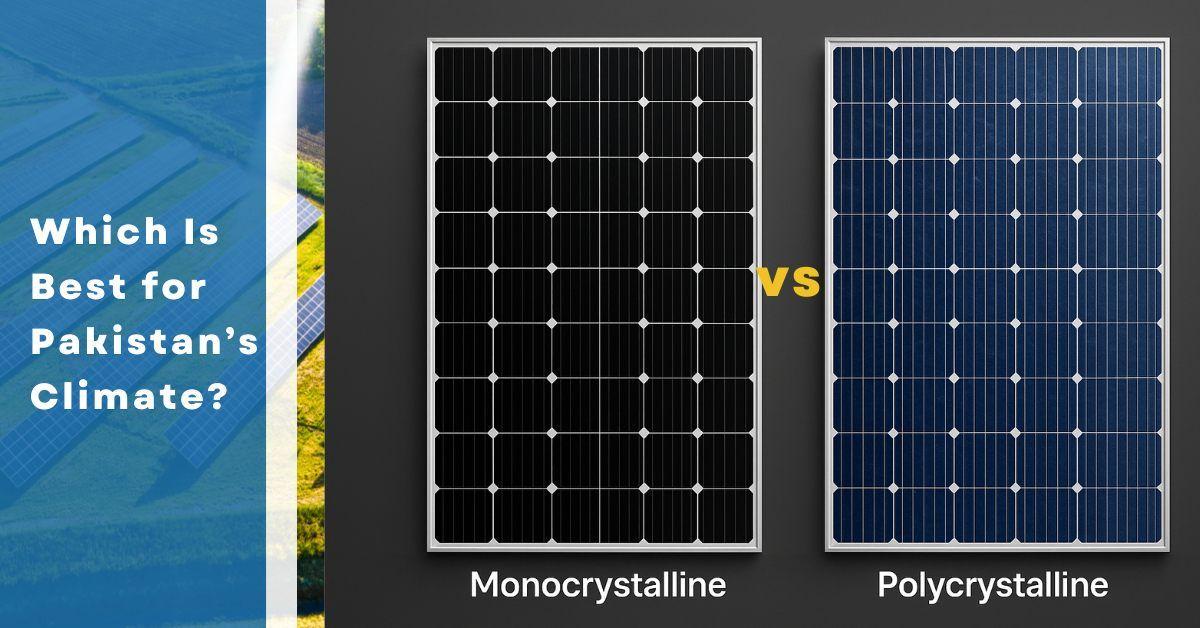
Choosing the right type of solar panel is crucial when planning your switch to solar energy. In Pakistan, where solar adoption is on the rise, one common debate among homeowners and businesses is the decision between Monocrystalline vs Polycrystalline solar panels. Both options offer distinct advantages, but your choice depends on several factors, including budget, space, climate, and efficiency needs.
Monocrystalline panels, made from single-crystal silicon, are known for their high efficiency and sleek black appearance. These panels typically convert more sunlight into electricity, making them ideal for homes or businesses with limited roof space. Their efficiency rate generally ranges between 18% to 22%, which means you get more power per square meter compared to polycrystalline panels.
On the other hand, polycrystalline panels are made by melting multiple silicon fragments together. They usually have a blue hue and a slightly lower efficiency rate, averaging around 15% to 17%. However, they are more affordable, making them a popular choice for large installations where space is not a constraint. Their production process is simpler, reducing manufacturing costs and thus the final retail price.
In the Pakistani context, where sunlight is abundant throughout most of the year, both panel types can perform well. However, Monocrystalline vs Polycrystalline considerations go beyond efficiency. For instance, monocrystalline panels tend to perform better in hot weather, which is ideal for southern parts of the country like Sindh and Balochistan. They are also more durable and have a longer lifespan.
Polycrystalline panels, while slightly less efficient, can be a better fit for large-scale agricultural or industrial applications in regions like Punjab, where land and rooftop space are more readily available. The key advantage here is cost savings—enabling larger systems at lower initial investment.
Another consideration is aesthetics. Many homeowners in urban centers like Lahore, Karachi, and Islamabad prefer the uniform black look of monocrystalline panels, which blend better with modern architecture. On the other hand, rural or industrial installations might prioritize function over form, making polycrystalline the more practical choice.
Ultimately, the decision between monocrystalline and polycrystalline panels depends on your specific needs and priorities. Budget-conscious buyers might opt for polycrystalline panels to cover a larger area, while those focused on maximizing output in smaller spaces should lean towards monocrystalline options.
To make the best decision, consult a trusted solar installer who understands local conditions and can evaluate your property’s sun exposure, energy demands, and long-term goals.
Conclusion:
Whether you choose monocrystalline for high efficiency or polycrystalline for affordability, the shift to solar is a smart investment for Pakistan’s energy future. Learn more about the differences and benefits of both options in our full guide on Monocrystalline vs Polycrystalline panels in Pakistan.

 English
 Arabic
 French
 Spanish
 Portuguese
 Deutsch
 Turkish
 Dutch
Dutch
 Italiano
 Russian
 Portuguese (Brazil)
 Greek
Greek