
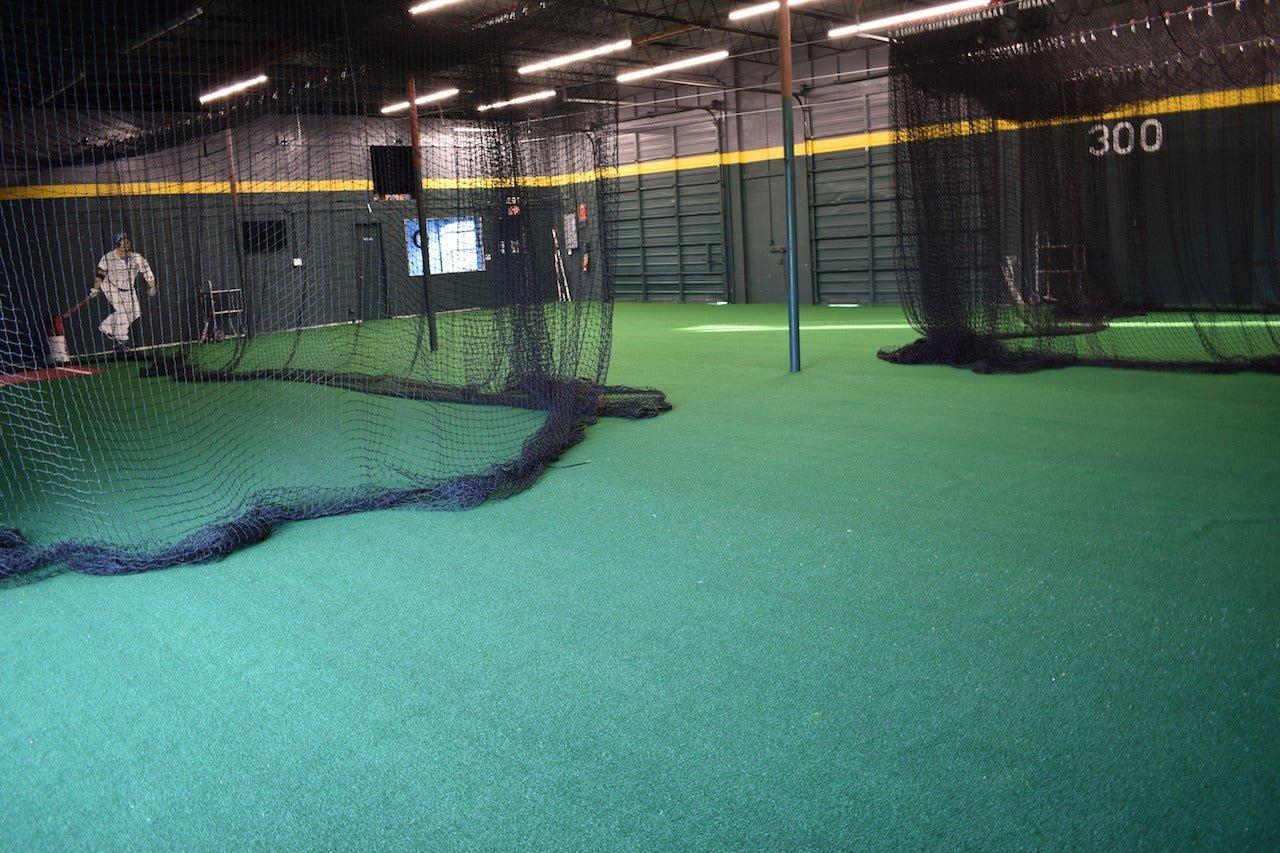
Think about the countless hours baseball and softball players spend inside batting cages. Each swing, step, and drill takes place on one thing most people overlook—the ground beneath their feet. The surface may not seem as important as the bat or the ball, but the wrong flooring can quickly wear down athletes, damage equipment, and shorten the life of your batting cage. That’s where batting cage turf comes in.
The right turf transforms a batting cage from a simple practice space into a professional-grade training environment. It improves safety, reduces maintenance, and creates a consistent playing surface that athletes can trust. Whether you’re running a commercial training facility, a school program, or a backyard cage, the turf you choose will directly impact performance, durability, and even costs over time.
In this guide, we’ll break down everything you need to know about batting cage turf. We’ll cover why it matters, the different options available, how it compares to other surfaces, and practical tips on choosing the best turf for your needs. We’ll also look at how it ties into batting cage installation and why it’s an essential component for both indoor and outdoor batting cages.
Why Batting Cage Turf Matters
When you step into a batting cage, every movement happens on the surface beneath you. Players take hundreds of swings per session, and coaches run endless drills. Without the right turf, the surface can break down quickly, leading to uneven footing, slippery spots, or unsafe conditions.
Here’s why the right batting cage turf makes a difference:
-
Safety: Turf provides cushioning, reducing the risk of slips, falls, or joint strain.
-
Durability: High-quality turf withstands heavy foot traffic, batting tees, and pitching machines.
-
Consistency: A uniform surface helps players develop proper mechanics without adjusting to uneven ground.
-
Maintenance: Turf requires less upkeep than dirt or grass, saving time and costs.
-
Professional feel: Players and parents notice when a facility looks and feels professional, and turf plays a big role in that impression.
Think of it this way: just as hitters rely on consistent pitching to improve, they also rely on consistent footing. A good batting cage turf provides exactly that.
Types of Batting Cage Turf
Not all turf is the same. Over the years, turf technology has evolved to meet the demands of athletes and facilities. When considering options, it’s important to understand the main types:
1. Nylon Turf
Nylon is one of the strongest synthetic fibers used in turf. It holds up well under high traffic and provides a firm, natural feel underfoot. However, it can be more expensive and less forgiving on joints compared to softer materials.
2. Polypropylene Turf
This is a more budget-friendly option. It offers a softer surface and works well for lighter-use cages, such as personal or backyard setups. The downside is that it doesn’t last as long in high-traffic commercial environments.
3. Polyethylene Turf
Polyethylene combines durability with softness, making it a popular choice for professional training facilities. It provides a realistic feel while being easier on the body than nylon.
4. Padded Turf
Some batting cage turfs come with built-in padding. This adds extra cushioning, making it safer and more comfortable for players who spend hours practicing. Padded turf also helps reduce noise from footsteps and equipment.
Understanding these differences allows you to match the turf type to your facility’s needs, usage level, and budget.
Batting Cage Turf vs. Other Surfaces
A natural question many facility owners ask is: why not just use dirt, concrete, or grass? Let’s compare.
-
Grass: Looks great but wears down quickly, especially in high-use batting cages. It also requires mowing, watering, and constant upkeep.
-
Dirt/Clay: Traditional for baseball fields, but inside cages it creates dust, uneven surfaces, and requires constant raking and watering.
-
Concrete: Durable but unsafe. Hard impacts increase the risk of joint injuries and don’t replicate real field conditions.
-
Rubber flooring: Sometimes used, but doesn’t provide the same realistic look, feel, or ball response as turf.
Compared to these, batting cage turf strikes the balance between safety, realism, and durability, making it the preferred choice for serious training.
Key Factors to Consider When Choosing Batting Cage Turf
Selecting turf isn’t just about grabbing the first option available. The right decision requires looking at several factors:
Durability
Ask yourself how often the cage will be used. A school or commercial facility will need heavy-duty turf that can handle thousands of swings weekly, while a backyard cage may get by with lighter turf.
Padding
Padded turf adds comfort and protection, especially for younger players or long training sessions. Consider how important this feature is for your users.
Pile Height
Turf comes in different pile heights (the length of the fibers). Shorter piles are easier to clean and maintain, while longer piles can feel more natural underfoot.
Installation Surface
Are you placing the turf on concrete, asphalt, or dirt? Some turfs work better on certain bases, and professional batting cage installation can help ensure proper fit and durability.
Cost vs. Longevity
Cheaper turf may save money upfront but wear out quickly. High-quality turf often pays off over time by lasting longer and requiring less replacement.

 Arabic
 French
 Spanish
 Portuguese
 Deutsch
 Turkish
 Dutch
Dutch
 Italiano
 Russian
 Romaian
 Portuguese (Brazil)
 Greek
Greek