
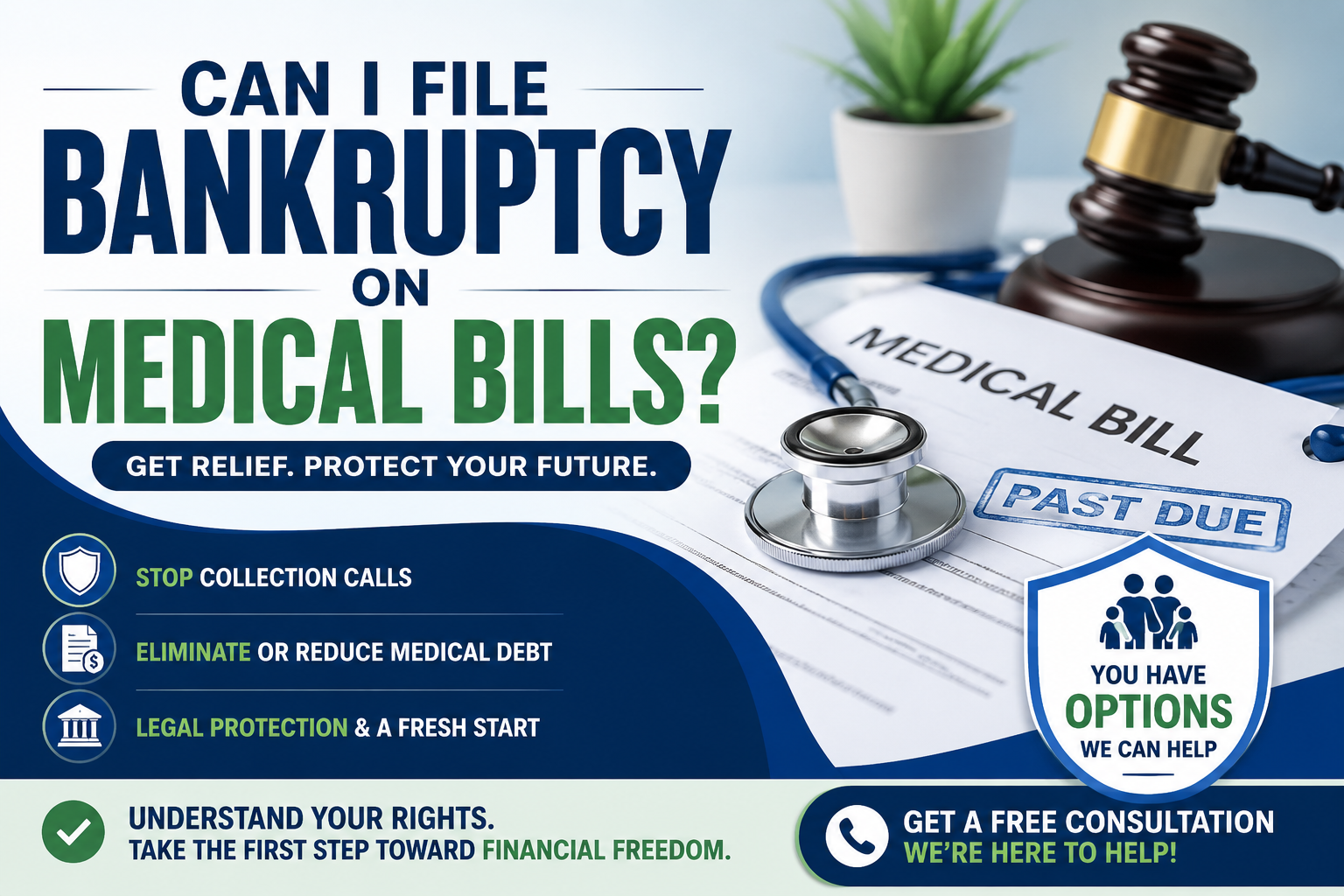
Medical emergencies can happen without warning, and the resulting expenses often leave individuals and families struggling with serious financial pressure. From hospital stays to surgeries and ongoing treatments, healthcare costs can quickly pile up. Many people facing overwhelming debt ask an important question: “Can I file bankruptcy on medical bills?” Understanding how bankruptcy works can help you make informed decisions about your financial future.
Understanding Medical Debt and Bankruptcy
Medical debt is one of the most common reasons people consider bankruptcy. Since medical bills are usually classified as unsecured debt, they may qualify for discharge through bankruptcy proceedings. Unsecured debt means the obligation is not backed by property or collateral.
Filing bankruptcy can provide legal protection from creditors and help individuals regain financial stability when medical expenses become impossible to manage.
Can Medical Bills Be Included in Bankruptcy?
Yes, medical bills can typically be included in bankruptcy filings. Depending on the type of bankruptcy filed, some or all medical debt may be eliminated or reorganized into manageable payments.
Once a bankruptcy case is filed, an automatic stay goes into effect. This legal protection temporarily stops collection calls, lawsuits, wage garnishments, and other creditor actions related to medical debt.
Types of Bankruptcy Used for Medical Debt Relief
Chapter 7 Bankruptcy
Chapter 7 bankruptcy is often used by individuals with limited income and significant debt. It allows qualifying unsecured debts, including medical bills, to be discharged completely in many cases.
This option is generally faster than other bankruptcy chapters and may provide a fresh financial start within a few months.
Chapter 13 Bankruptcy
Chapter 13 bankruptcy involves creating a court-approved repayment plan that usually lasts three to five years. This option may help individuals who have regular income and want to protect valuable assets while catching up on debts.
At the end of the repayment plan, remaining eligible medical debt may be discharged.
Benefits of Filing Bankruptcy for Medical Bills
Filing bankruptcy may provide several important benefits for people struggling with healthcare expenses:
-
Stops aggressive collection efforts
-
Prevents lawsuits and wage garnishments
-
Helps eliminate qualifying medical debt
-
Offers structured repayment options
-
Reduces financial stress
-
Creates an opportunity for a fresh start
For many individuals, bankruptcy becomes a practical legal tool for managing severe medical debt.
What to Consider Before Filing Bankruptcy
Although bankruptcy may offer relief, it is important to understand the possible consequences. Bankruptcy can affect your credit report for several years and may impact future borrowing opportunities.
Before filing, individuals should review factors such as:
-
Total amount of debt
-
Monthly income and expenses
-
Assets and property ownership
-
Other financial obligations
-
Long-term financial goals
Consulting with a bankruptcy attorney can help determine whether bankruptcy is the best option for your situation.
Alternatives to Bankruptcy for Medical Debt
Some people may explore alternatives before deciding to file bankruptcy. These options can include:
-
Negotiating directly with healthcare providers
-
Setting up payment plans
-
Applying for hospital financial assistance programs
-
Debt settlement negotiations
-
Credit counseling services
While these solutions may work for some, bankruptcy may still be necessary when medical debt becomes unmanageable.
How Bankruptcy Can Help You Move Forward
Medical debt can create emotional and financial stress that affects every aspect of life. Bankruptcy laws are designed to help individuals facing overwhelming financial hardship. By understanding your legal options, you can take steps toward rebuilding financial stability and protecting your future.
Conclusion
If you are wondering, “Can I file bankruptcy on medical bills?” the answer is often yes. Bankruptcy may provide valuable relief by eliminating or restructuring medical debt and stopping creditor actions. Whether you qualify for Chapter 7 or Chapter 13 bankruptcy, learning about your options is the first step toward financial recovery and peace of mind.

 English
 Arabic
 French
 Spanish
 Portuguese
 Deutsch
 Turkish
 Dutch
Dutch
 Italiano
 Romaian
 Portuguese (Brazil)
 Greek
Greek