
Amidst the overall contraction of the global LED lighting market, the European horticultural lighting market is bucking the trend, driven by policy initiatives and technological advancements. According to a recent TrendForce report, the global LED horticultural lighting market is projected to reach US$1.366 billion in 2025, a 3.9% annual increase, making it one of the fastest-growing regional segments globally. Europe, as one of the fastest-growing regions for LED horticultural lighting, is expected to account for 35%-40% of the market by 2025.
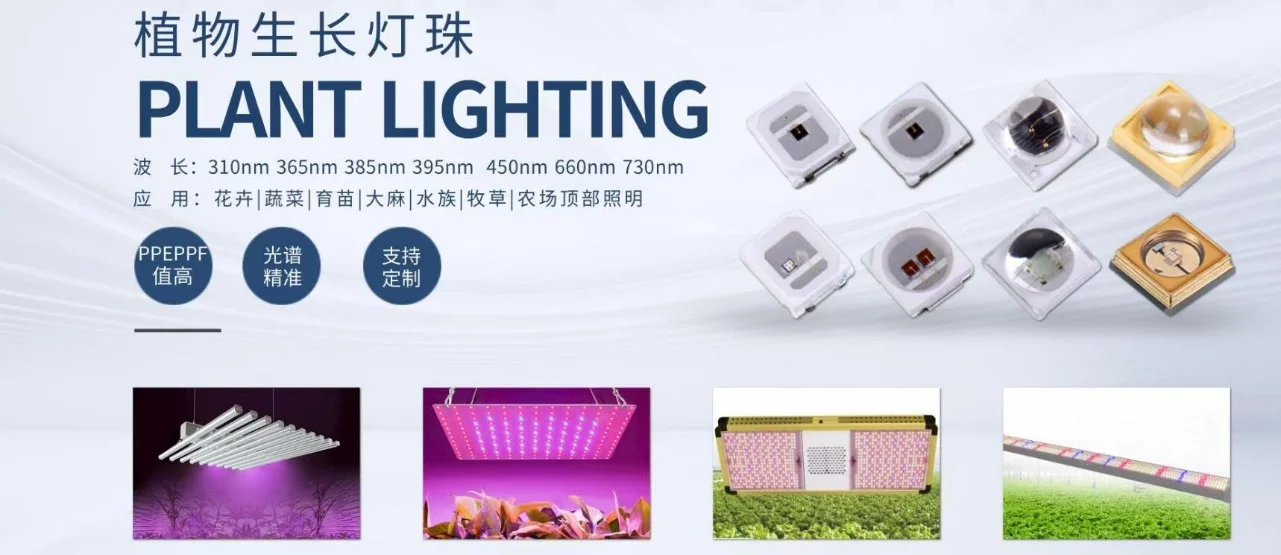
The EU's Green Deal, through the ERP Ecodesign Directive (EU) 2019/2020 (and its 2023 amendment), significantly raises the energy efficiency threshold, requiring non-directional LED lamps to achieve a minimum luminous efficacy of 85 lm /W from September 2025. Traditional inefficient equipment, such as high-pressure sodium lamps, faces mandatory elimination.
The EU Carbon Border Adjustment Mechanism (CBAM), based on Regulation (EU) 2023/956, will formally implement carbon tariffs starting in 2026 on six products with high carbon leakage risks, including steel and cement. While LED horticulture lighting is not included in the CBAM, it consumes 42%-48% less energy than high-pressure sodium lamps ( according to a TrendForce 2024 report). It is listed as a recommended technology in the EU's Sustainable Agriculture Guidelines, making it a key path to greenhouse emissions reduction.
For example, in the Netherlands, the government provided subsidies through the 2019 National Climate Agreement to promote the development of vertical farms. Experiments at Wageningen University have confirmed that a dynamic spectrum system can significantly increase tomato yields. Germany's Federal Ministry of Food and Agriculture (BMEL) launched a digital agriculture pilot project in 2024, experimentally applying tunable spectrum technology to selected facilities.
Land and energy pressures in Europe are driving investment in vertical farming. Infarm, a European vertical farming unicorn , has deployed hundreds of modular growing units across Europe and the US. Its Berlin farm's annual yield per unit area of leafy vegetables far exceeds that of traditional greenhouses. Policy-driven growth in the Netherlands has led to strong growth in LED procurement for plant lighting. Many EU countries allow the cultivation of medical marijuana, and LED technology has seen significant penetration in this sector, with significant yield increases in standardized trials.
Industry forecasts predict that the European smart home plant light market will be significant in 2025, with AI light formula lamps accounting for a considerable share, as they can also be used in space-constrained scenarios such as urban apartments.
While the global LED lighting market faces structural adjustments, the counter-cyclical growth of the European horticultural lighting market reveals the underlying logic behind the lighting industry's transformation—policies, regulations, and technological innovation are reshaping the industry's value proposition. In the future, horticultural lighting will accelerate its evolution toward customized light recipes and integrated system energy efficiency. Whether the Chinese lighting industry can leverage new infrastructure opportunities like carbon footprint accounting and smart agriculture to secure a more advantageous niche in the global green supply chain warrants continued industry attention.
https://www.y-crystaled.net/driven-by-energy-saving-regulations-demand-for-horticultural.html

 Arabic
 French
 Spanish
 Portuguese
 Deutsch
 Turkish
 Dutch
Dutch
 Italiano
 Russian
 Romaian
 Portuguese (Brazil)
 Greek
Greek