
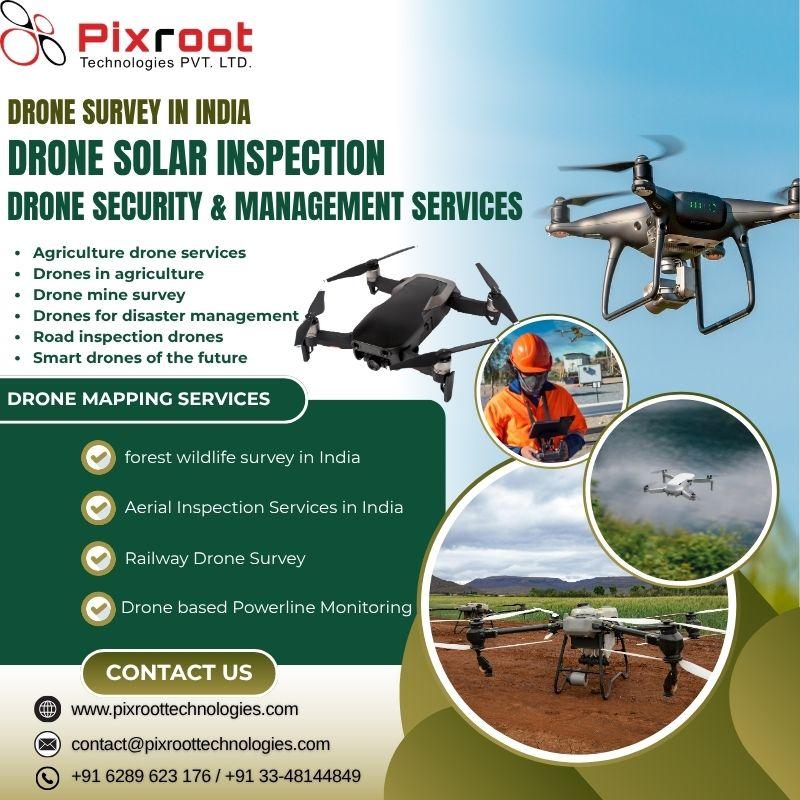
Inspection of the industrial premises is necessary to confirm whether the equipment is functioning properly and safely. Conventional inspection techniques include labor-intensive work, costly shutdowns, and even danger for workers. Drone industrial inspection represents a revolution in industrial monitoring of critical infrastructure due to its increased speed, safety and accuracy.
From factories and oil refineries to power plants and warehousing, Drone industrial inspection allows businesses to find potential defects timely, cut down on maintenance expenses and increase overall efficiency. High-resolution cameras, thermal sensors and innovative mapping software allow drones to gather valuable information without interrupting routine operations.
What is Drone Industrial Inspection?
Drone industrial inspection is the use of UAVs to conduct an inspection of industrial assets, constructions and equipment. Drones are equipped with sophisticated sensors, such as RGB camera, thermal imagery, LIDAR and zoom lenses to obtain accurate visual and thermal information.
Drones can reach hazardous areas and places that are difficult to reach with the help of cranes, rope access or scaffolding without posing any risks for employees.
Whatever the object that needs to be inspected (chimneys, storage tanks, pipelines, power transmission towers, processing plant etc.), drone inspection will provide reliable results and prevent operational downtime.
Why Are Industries Opting For Drone Inspections?
In many industries, there is equipment that is placed high up or in risky locations. Human inspections are risky for workers and also require shutdowns in production.
Drone industrial inspection enables businesses to conduct an inspection from a safe location without interrupting normal operations.
Some of the benefits include:
- Worker safety improvement
- Fast inspection process
- Decreased maintenance cost
- Detailed visual documentation
- Accurate thermal analysis
- Proper preventive maintenance planning
- Minimal operation downtime
- Reach confined and difficult places
Such advantages have made it indispensable in modern industrial asset management.
Applications Across Multiple Industries
The use of Drone industrial inspection continues to expand across various industrial sectors.
Common applications include:
Manufacturing Plants
Inspect production equipment, roofs, ventilation systems, storage areas, and structural components without disrupting manufacturing processes.
Power Generating Stations
Inspection of boilers, cooling towers, substations, transformers, chimneys, and electrical installations with aerial photography and thermal cameras.
Mining Operations
Stockpile inspection, conveyor belt inspection, excavations, and machinery inspection safely through aerial imaging.
Chemical Industry Plants
Reactor inspections, pipeline inspection, pressure vessels inspection, flare stack inspection, and tank inspection.
Ports and Logistics
Evaluate cranes, warehouses, loading terminals, and shipping infrastructure with high accuracy and minimal downtime.
Oil and Gas Drone Inspection for Critical Infrastructure
One of the fastest-growing applications of drone technology is Oil and gas drone inspection. The oil and gas industry relies on extensive infrastructure, including pipelines, offshore platforms, storage tanks, refineries, and processing facilities.
Traditional inspections often require shutdowns and expose workers to dangerous conditions. Drone inspections eliminate many of these challenges by capturing detailed visual and thermal data without direct human access.
Oil and gas drone inspection helps detect:
- Corrosion
- Pipeline leaks
- Structural cracks
- Thermal anomalies
- Valve failures
- Tank roof damage
- Insulation defects
- Flare stack deterioration
Early detection of these issues helps prevent costly repairs, environmental hazards, and unexpected equipment failures.
Advanced Technologies Used in Drone Industrial Inspection
Modern drones combine multiple technologies to produce comprehensive inspection reports.
These include:
High-Resolution Cameras
Capture detailed images for visual defect analysis.
Thermal Imaging
Identify overheating equipment, electrical faults, insulation failures, and hidden mechanical problems.
LiDAR Sensors
Generate accurate 3D models of industrial facilities for structural analysis and planning.
AI-Based Image Processing
Artificial intelligence helps automatically detect anomalies and classify defects, improving inspection speed and reporting accuracy.
Together, these technologies make Drone industrial inspection one of the most effective predictive maintenance tools available today.
Benefits of Regular Drone Inspections
Routine inspections provide valuable insights that improve operational reliability.
Some major benefits include:
Improved Safety
Workers no longer need to climb towers, enter confined spaces, or inspect hazardous equipment manually.
Reduced Downtime
Most inspections can be completed without shutting down production, saving both time and money.
Cost Savings
Drone inspections reduce labor requirements while eliminating the need for scaffolding, cranes, and rope-access teams.
Better Maintenance Planning
Detailed inspection reports allow maintenance teams to prioritize repairs before failures occur.
High Data Accuracy
Advanced sensors produce precise visual and thermal information for informed decision-making.
Why Preventive Maintenance Matters
Reactive maintenance is expensive and often results in unexpected production losses. Preventive maintenance supported by Drone industrial inspection allows businesses to identify problems before they escalate.
Regular inspections help extend equipment life, improve operational efficiency, reduce emergency repairs, and increase return on investment.
Instead of waiting for failures to occur, industries can use drone-generated data to schedule maintenance based on actual asset conditions.
Why Choose Pixroot Technologies?
For organizations seeking professional aerial inspection services, Pixroot Technologies offers advanced drone solutions tailored to industrial environments. Using state-of-the-art UAVs equipped with thermal imaging cameras, high-resolution sensors, and intelligent data analysis tools, the company delivers accurate and reliable inspection results.
From manufacturing plants and power facilities to infrastructure projects and Oil and gas drone inspection, Pixroot Technologies helps businesses improve safety, reduce maintenance costs, and make informed operational decisions through detailed inspection reports and actionable insights.
Their experienced drone pilots and inspection specialists follow industry best practices to ensure every project is completed safely, efficiently, and with exceptional accuracy.
The Future of Industrial Inspections
With the constant development in drone technology in the sphere of artificial intelligence, automation, cloud analytics, and autonomous flight ability, future industrial inspections will be much faster, accurate, and predictive.
In the face of digital transformation, drones will prove their usefulness in the monitoring of important facilities, ensuring workplace safety, and cutting down operational costs.
Today's industries require inspection processes that are safe, efficient, and economical. Drone industrial inspection has become an essential part of ensuring that the industrial structures remain intact and save on risks and time.
Regardless of whether you are inspecting a manufacturing plant, power plants, storage tanks, or conducting Oil and gas drone inspection, the use of drone technology will bring unparalleled efficiency and accuracy. With frequent use of drones in your industrial inspection, downtime will be minimized.

 English
 Arabic
 French
 Spanish
 Portuguese
 Deutsch
 Turkish
 Dutch
Dutch
 Russian
 Romaian
 Portuguese (Brazil)
 Greek
Greek