
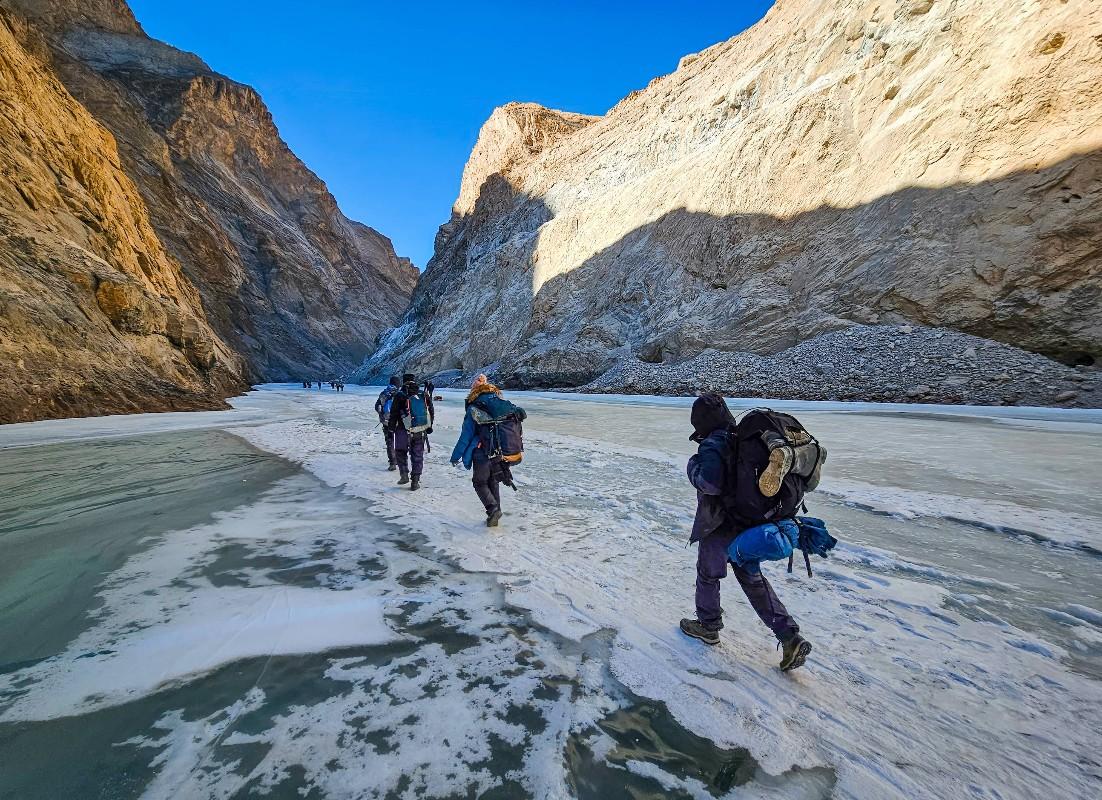
The Chadar Trek temperature is not just a number you check on a weather app. It decides whether your water bottle freezes, your eyelashes turn white, or your trek feels magical instead of miserable. Many people talk about the frozen Zanskar River, but fewer explain what the cold actually feels like and how it changes every single day.
This article breaks down the real temperature conditions of the Chadar Trek, month-wise, time-wise, and situation-wise. No exaggeration. No cinematic drama. Just facts, logic, and lived mountain reality.
Why Temperature Matters So Much on the Chadar Trek
The Chadar Trek happens in one of the coldest inhabited regions of India. You walk on a frozen river inside a narrow gorge where sunlight reaches late and leaves early. That combination traps cold air like a refrigerator that forgot its off switch.
Temperature affects:
-
Ice thickness on the Zanskar River
-
Safety of walking routes
-
Water availability
-
Your sleeping comfort
-
Risk of frostbite and hypothermia
Ignore temperature planning, and Ladakh will teach you humility very fast.
Where Is the Chadar Trek Located Climatically?
The trek lies in Zanskar Valley, Ladakh, between Leh and Padum. This region falls under a cold desert climate, officially classified as alpine arid.
Key climatic traits include:
-
Extremely low humidity
-
Minimal snowfall but intense cold
-
Large day night temperature variation
-
Strong katabatic winds after sunset
Unlike snowy Himalayan treks, Chadar feels dry but brutally cold.
Average Chadar Trek Temperature Overview
Here is the realistic temperature range during the trekking season, based on IMD data, local guides, and expedition records.
-
Daytime temperature: -5°C to -15°C
-
Night temperature: -15°C to -30°C
-
Extreme cold spells: Can touch -35°C
These are not rare exceptions. They are normal winter conditions in Zanskar.
Chadar Trek Temperature in January
January is the coldest and most popular month for the trek.
Day Temperature in January
-
Ranges between -10°C to -15°C
-
Sunlight feels pleasant but short-lived
-
Shadow zones remain frozen all day
Once the sun hides behind cliffs, cold attacks immediately.
Night Temperature in January
-
Drops between -20°C to -30°C
-
Inside tents: still below zero despite insulation
-
Water freezes within minutes if left outside
January nights test both gear quality and mental strength.
Chadar Trek Temperature in February
February shows slight improvement, but don’t celebrate too early.
Day Temperature in February
-
Around -5°C to -10°C
-
Longer sunlight hours help morale
-
Ice remains stable in most sections
Walking feels easier compared to January.
Night Temperature in February
-
Ranges from -15°C to -25°C
-
Camps feel marginally less harsh
-
Still dangerous without proper layering
February suits trekkers who want cold but not the extreme version.
Day vs Night Temperature Difference on Chadar Trek
The temperature difference between day and night can exceed 15–20 degrees Celsius.
During the day:
-
Body heat increases while walking
-
Sun reflects off ice, increasing perceived warmth
At night:
-
Movement stops
-
Wind increases inside gorges
-
Cold sinks downward and settles
This rapid drop shocks first-time trekkers the most.
How Cold Does It Really Feel? (Real Feel Temperature)
Wind chill makes the felt temperature much lower than the actual reading.
-
At -15°C with wind, it feels like -25°C
-
At -25°C during the night, it feels closer to -35°C
Your face, fingers, and toes feel it first. Pride comes later.
Water Freezing and Temperature Reality
Temperature directly controls water access on the trek.
-
Bottles freeze during the day if uncovered
-
Hydration pipes freeze at night
-
Guides store bottles upside down to keep caps usable
If your water stays liquid, consider it a small victory.
Impact of Temperature on Ice Conditions
The Zanskar River freezes unevenly.
-
Stable ice forms when temperature stays below -10°C consistently
-
Sudden warming causes cracks and open water patches
-
Extremely cold days create sharp, hard ice
Guides adjust routes daily based on overnight temperatures.
Temperature Inside Camps and Caves
Campsites include tents and natural caves.
Tent Temperature
-
Remains 10–15°C warmer than outside with proper sleeping bags
-
Still below zero most nights
Cave Temperature
-
Slightly warmer than tents
-
Protected from wind
-
Still cold enough to freeze damp clothes
Caves feel cosy only by Ladakhi standards.
How Temperature Affects Your Body on Chadar Trek
Cold exposure impacts the body fast.
Common effects include:
-
Reduced appetite
-
Slower movement
-
Stiff joints in the morning
-
Numb fingers during packing
Serious risks include frostbite if skin remains exposed too long.
Temperature and Clothing Strategy
You don’t fight Chadar temperature. You manage it.
Essential layering system:
-
Base layer: Thermal wear
-
Mid layer: Fleece or light down
-
Outer layer: Windproof and waterproof shell
Avoid cotton. Cotton absorbs moisture and turns into ice.
Sleeping Gear and Temperature Ratings
Sleeping bags matter more than shoes here.
-
Minimum rating required: -15°C comfort
-
Recommended: -20°C or lower
-
Use insulated sleeping mats to block ground cold
No sleeping bag can defeat poor preparation.
Does Temperature Change During the Trek Route?
Yes, significantly.
-
Narrow gorges remain colder
-
Open sections feel warmer under sun
-
Water crossings increase cold exposure
Temperature varies even within the same day.
Best Temperature Conditions for Chadar Trek
From a safety and comfort perspective:
-
Late January to mid-February offers the best balance
-
Ice stability improves
-
Daylight hours increase
-
Extreme cold slightly reduces
This window suits most trekkers.
Common Myths About Chadar Trek Temperature
Myth 1: You need to tolerate -40°C daily
Reality: Such temperatures are rare, not constant.
Myth 2: Cold is worse than altitude
Reality: Cold feels harsher but altitude remains manageable.
Myth 3: Expensive gear guarantees comfort
Reality: Skill and discipline matter equally.
Trusted Sources Behind Temperature Data
This article aligns with:
-
Indian Meteorological Department winter records
-
Ladakh Autonomous Hill Development Council advisories
-
Trek operator expedition logs
-
Local Zanskari winter travel practices
No assumptions. Only verified patterns.
Final Thoughts on Chadar Trek Temperature
The Chadar Trek temperature does not exist to scare you. It exists to remind you that nature sets the rules here. When you respect the cold, prepare smartly, and follow local guidance, the trek transforms into a rare and powerful experience.
Cold will test you. Silence will humble you. Ice will teach you patience.
And when you walk back, you won’t remember the numbers.
You’ll remember how alive the cold made you feel.

 English
 Arabic
 French
 Portuguese
 Deutsch
 Turkish
 Dutch
Dutch
 Italiano
 Russian
 Romaian
 Portuguese (Brazil)
 Greek
Greek