
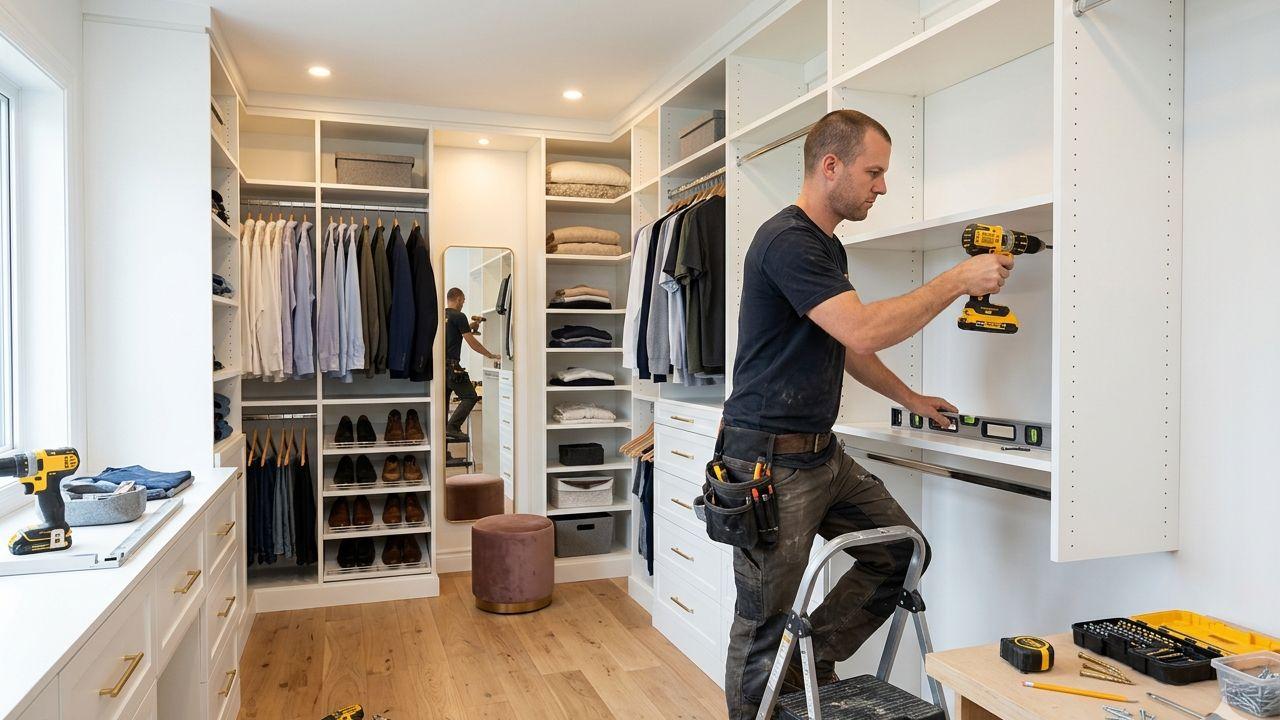
A well-designed storage system can completely change the way a home looks and functions. One of the most popular modern home upgrades is walk-in closet installation, which combines organization, luxury, and practicality in a single space. Whether you live in a compact apartment or a large house, a walk-in closet can help you maximize storage while improving accessibility and visual appeal.
Walk-in closet installation is not just about adding shelves and rods. It is a thoughtful process that involves planning, designing, and customizing storage according to your lifestyle. In this article, we will explore what walk-in closet installation means, how it works, its benefits, design ideas, and practical considerations before starting your project.
What Is Walk-In Closet Installation?
Walk-in closet installation refers to the process of designing and building a dedicated storage room or area that allows you to physically “walk into” your wardrobe space. Unlike traditional wardrobes or reach-in closets, walk-in closets offer more room, better organization, and a higher level of customization.
The installation process typically includes:
- Measuring the available space
- Designing a layout based on storage needs
- Installing shelves, drawers, hanging rods, and compartments
- Adding lighting and finishing touches
A properly installed walk-in closet is tailored to your clothing, accessories, shoes, and personal storage habits.
Why Walk-In Closet Installation Is Becoming So Popular
In modern interior design, walk-in closets are no longer considered a luxury reserved for large homes. They are now widely used because they improve everyday living.
1. Better Organization
A walk-in closet provides designated space for everything—shirts, suits, shoes, bags, and accessories. This reduces clutter in bedrooms and makes it easier to find items quickly.
2. Efficient Use of Space
Even small rooms can be transformed into efficient storage areas with smart design. Vertical shelving and modular systems help maximize every inch.
3. Enhanced Home Value
Homes with well-designed storage solutions often have higher resale value. Buyers appreciate organized spaces, especially modern walk-in closets.
4. Personal Customization
Every individual has different storage needs. Walk-in closet installation allows complete customization based on wardrobe size, lifestyle, and preferences.
Planning Your Walk-In Closet Installation
Proper planning is the most important stage of any installation project. Without a clear plan, even a large space can become inefficient.
Assessing the Available Space
Start by identifying the area you want to convert. It could be:
- A spare room
- A section of a bedroom
- An unused corner or alcove
Measure height, width, and depth accurately. These measurements will determine your layout options.
Understanding Your Storage Needs
Before design begins, evaluate your belongings:
- How many clothes do you hang vs fold?
- Do you need shoe storage?
- Do you have accessories like bags, ties, or jewelry?
This helps in deciding the number of shelves, drawers, and hanging sections.
Choosing a Layout Style
Common walk-in closet layouts include:
- Single wall design
- L-shaped layout
- U-shaped layout
- Island center design (for larger rooms)
Each layout has its own advantages depending on room size and usage.
Step-by-Step Walk-In Closet Installation Process
Understanding the installation process helps you prepare better and avoid mistakes.
Step 1: Design and Concept Planning
The first step involves creating a layout plan. Many homeowners use professional designers or digital tools to visualize the final look.
Key considerations include:
- Storage distribution
- Walking space
- Lighting placement
- Aesthetic theme
Step 2: Material Selection
Materials play a big role in durability and appearance. Popular choices include:
- Wood (classic and durable)
- MDF (cost-effective and flexible)
- Laminates (modern and stylish)
- Metal frames (industrial look and strong support)
Step 3: Structural Installation
This stage involves building the framework:
- Installing wall panels
- Fixing shelving units
- Mounting hanging rods
- Adding drawer systems
Precision is important to ensure stability and proper alignment.
Step 4: Lighting Installation
Good lighting enhances both functionality and aesthetics. Options include:
- LED strip lights
- Ceiling spotlights
- Motion sensor lights inside drawers or shelves
Proper lighting makes it easier to find items and adds a luxurious feel.
Step 5: Final Finishing and Organization
The final stage includes finishing touches such as:
- Painting or laminating surfaces
- Adding handles and accessories
- Organizing clothes and items
At this stage, your walk-in closet becomes fully functional.
Design Ideas for Walk-In Closet Installation
A well-designed closet is both practical and visually appealing. Here are some popular design ideas:
Minimalist Design
A clean and simple layout with neutral colors, hidden storage, and straight lines. This design focuses on functionality and reduces visual clutter.
Luxury Walk-In Closet
Includes premium materials, glass doors, LED lighting, and sometimes even seating areas or mirrors. It creates a boutique-style experience at home.
Compact Space Design
Perfect for small homes, this design uses vertical storage, sliding doors, and multi-functional shelves to save space.
Modern Open Concept
An open closet without doors, often connected to the bedroom. It gives a spacious feel but requires neat organization.
Common Mistakes to Avoid During Installation
Even a well-planned project can go wrong if certain mistakes are made.
Ignoring Space Measurements
Incorrect measurements can lead to poor fitting shelves or wasted space.
Overcrowding the Design
Too many shelves or drawers can make the closet feel cramped and reduce usability.
Poor Lighting Choices
Insufficient lighting makes it difficult to use the space efficiently.
Not Planning for Future Storage Needs
A good walk-in closet should allow flexibility for future wardrobe expansion.
Benefits of Professional Walk-In Closet Installation
While DIY projects are possible, hiring professionals often ensures better results.
Expert Design Guidance
Professionals understand space optimization and can suggest layouts you may not consider.
High-Quality Installation
Proper tools and experience lead to stronger, longer-lasting structures.
Time Efficiency
A professional team can complete the installation much faster than a DIY approach.
Custom Solutions
Experts can build fully customized systems based on your exact needs.
Maintenance Tips for Walk-In Closets
Once installed, maintaining your closet keeps it functional and attractive.
- Regularly declutter unused clothing
- Clean shelves and surfaces weekly
- Avoid overloading hanging rods
- Reorganize seasonally
- Check for wear in drawers and hinges
Good maintenance ensures your closet remains efficient for years.
Cost Factors in Walk-In Closet Installation
The cost of installation varies depending on several factors:
- Size of the space
- Material quality
- Design complexity
- Custom features (lighting, mirrors, accessories)
- Professional labor charges
A basic setup may be affordable, while a luxury design can require a higher investment. However, the long-term value in convenience and home appeal often outweighs the cost.
Conclusion
Walk-in closet installation is more than a home improvement project—it is a lifestyle upgrade. It enhances organization, improves space utilization, and adds a touch of luxury to everyday living. Whether you prefer a simple, compact design or a high-end custom closet, careful planning and proper installation are key to achieving the best results.
By understanding your needs, selecting the right layout, and avoiding common mistakes, you can create a walk-in closet that is both functional and stylish. In today’s modern homes, this type of storage solution is no longer just an option—it is becoming a standard for better living and smarter organization.

 English
 Arabic
 Spanish
 Portuguese
 Deutsch
 Turkish
 Dutch
Dutch
 Italiano
 Russian
 Romaian
 Portuguese (Brazil)
 Greek
Greek